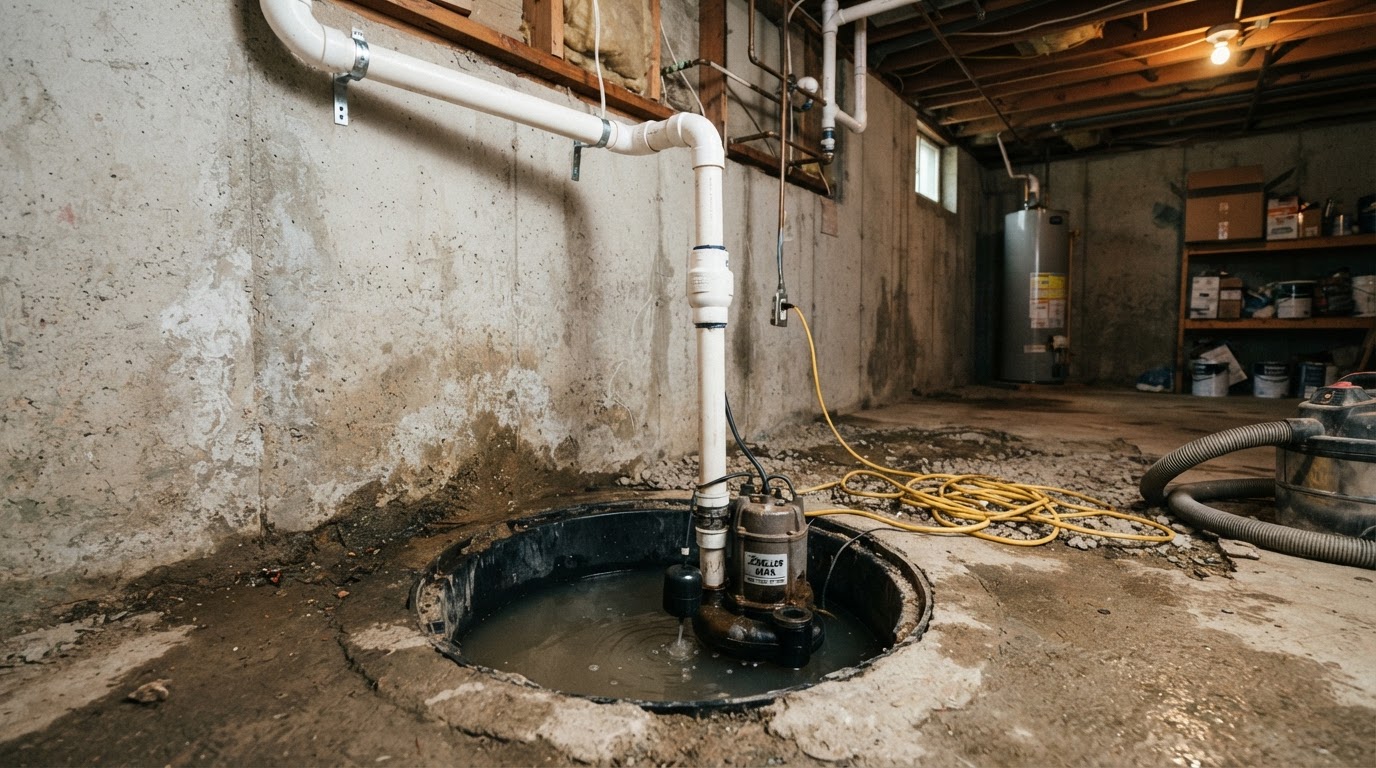
Reliable Sump Pump Service for Murfreesboro Homes
A sump pump has an important job: moving collected water away from the area where it could otherwise reach your basement. When the pump stops working, runs constantly, makes unusual noises, or cannot keep up with incoming water, the problem deserves prompt attention.
We provide sump pump repair and installation for homeowners who need to restore or improve their basement water-management setup. We consider the existing pump, discharge arrangement, pit, incoming water, and overall drainage conditions when discussing the right next step.
Sump Pump Problems We Address
A pump problem is not always just a bad pump. The surrounding drainage and discharge system can affect how well the system performs.
Pump Not Running
If the pump does not activate when water rises, the power, controls, pump, and surrounding setup may need attention.
Pump Running Frequently
A pump that runs often may be responding to significant incoming water or conditions that need to be understood.
Sump Pump Replacement
When repair is no longer practical, we can discuss installation of a replacement pump suited to the system.
Water Discharge
The discharge path matters because collected water needs a suitable route away from the home.
Diagnosing Sump Pump Problems
A sump pump problem is not always a bad pump. The pump is one part of a system that includes the pit, the float or switch that triggers it, the power supply, the discharge pipe, and the drainage conditions that send water to the pit in the first place. When a pump is not doing its job, the first question is which part of that system is failing — because replacing a pump that was never the problem just delays the real fix.
Common signs include a pump that does not turn on when the pit fills, a pump that runs constantly or short-cycles, strange noises like grinding or humming, water in the basement that the pump should have prevented, and a discharge that does not seem to move water away from the house. Each points to a different possible cause: a stuck float, a failing switch, a clogged discharge line, a pump at the end of its life, or even a pit that is too small or poorly placed for the amount of water arriving.
What gets misdiagnosed is the relationship between the pump and the water. A pump that runs constantly might be assumed to be broken when the real issue is that far more water is reaching the pit than the system was designed for — because of a drainage problem, a high water table, or a foundation issue sending water toward the basement. A pump that never runs might be assumed fine until the one storm that overwhelms it. That is why we look at the whole system — the pump, the pit, the discharge, and the water coming in — before deciding whether the answer is repair, replacement, or something else entirely.
How Sump Pump Repair and Installation Is Approached
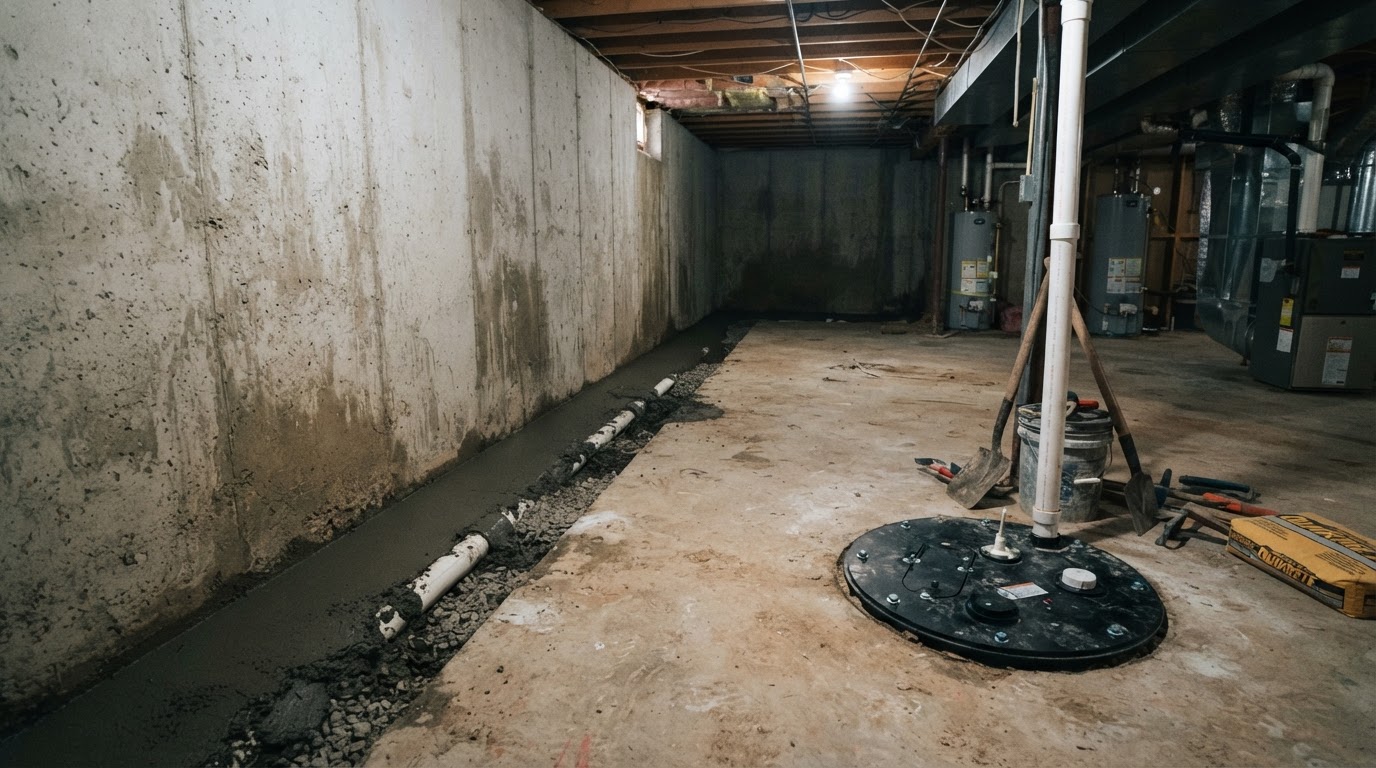
The right fix depends on what the diagnosis found. If the pump itself is the problem — a failed switch, a worn motor, a stuck float — repair or replacement of the pump may be the answer. If the discharge line is clogged, frozen, or routed poorly, that may be the real issue, and a new pump will not fix it. If the pit is too small or the water arriving is more than the system can handle, the solution may involve changes beyond just the pump. The approach should match the actual problem.
In plain terms, the process starts with understanding what the pump is doing and what the surrounding system looks like, then deciding whether repair, replacement, or a broader change is the right step. We will not assume every pump problem needs a new pump, and we also will not patch up a failing pump that is clearly at the end of its life and likely to leave a homeowner with a wet basement at the worst possible moment. When replacement is the right call, the new pump should be suited to the system and the amount of water it needs to handle.
What to expect: we explain what we found — whether the issue is the pump, the switch, the discharge, the pit, or the water coming in — and what the practical options are. We will be clear about whether the existing pump can be repaired or should be replaced, and about any part of the system that needs attention for the pump to do its job. The goal is a water-management setup that actually works when the next storm comes, not just a pump that runs when tested.
Preventing Future Sump Pump Problems
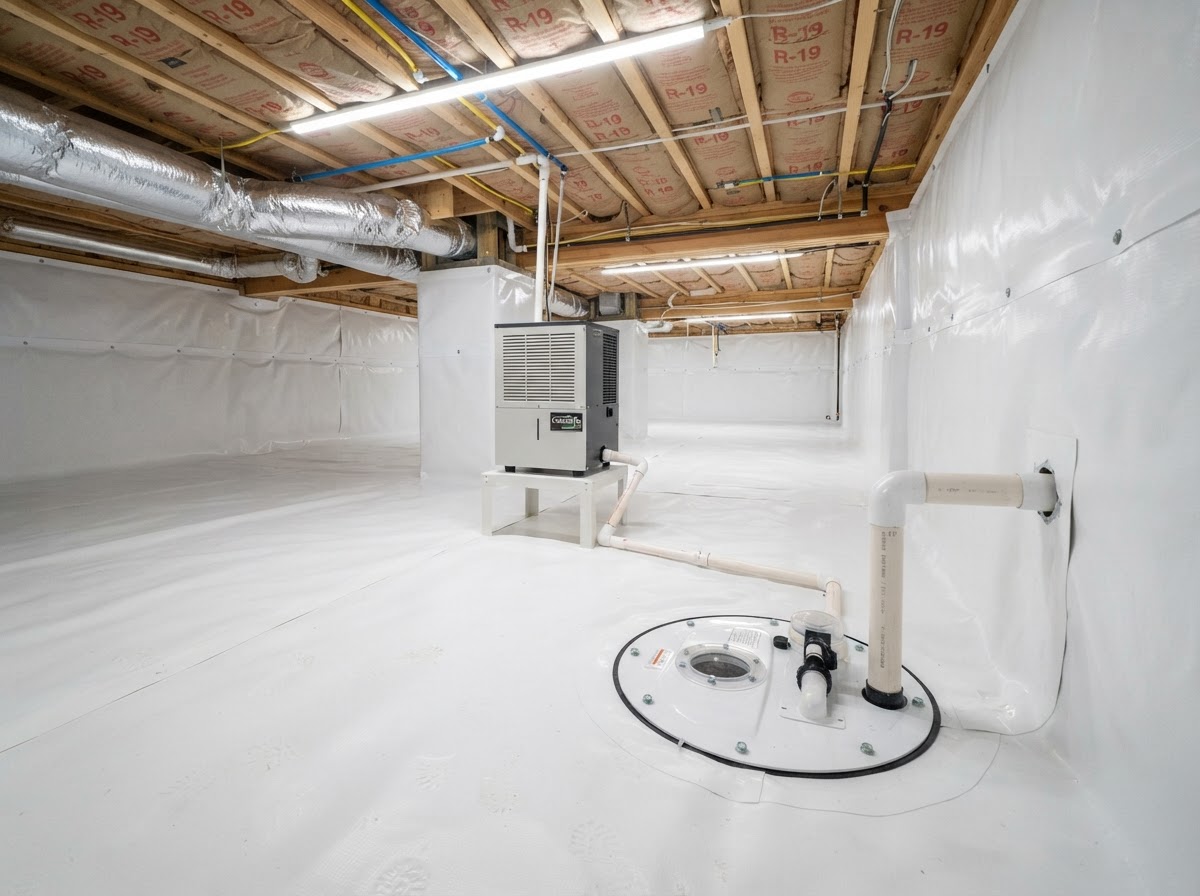
A sump pump is the kind of equipment you forget about until the moment you need it most, so a little prevention goes a long way. The most important habit is testing the pump before the wet season — pour water into the pit and confirm the pump turns on and the water exits through the discharge. A pump that fails during the first big storm of the season is a common and largely avoidable cause of basement flooding, and a quick test a few times a year catches most problems early.
The discharge line deserves attention too. It needs to carry water well away from the foundation and stay clear of debris, and in cold snaps it can be vulnerable to freezing if the grade is not right. Make sure the discharge point is not sending water back toward the house or into a spot that pools. If the home depends heavily on the pump during storms, consider whether a backup pump or power source makes sense — a pump that only works when the power is on is a risk during the storms that cause outages.
Seasonally, test the pump before the wettest months, check the discharge during a storm to confirm water is actually exiting the system, and clear any debris from the pit. If you notice the pump running more than usual, that may be a sign of a new drainage issue rather than a pump problem — worth investigating before it becomes an emergency. And if the pump is getting older or has needed repeated repairs, it is better to plan a replacement on your schedule than to wait for it to fail during a storm. Calling when you first notice a change is always cheaper than calling after the basement has water in it.
Sump Pump Repair & Installation Cost
| Service | Estimated Cost | Average |
|---|---|---|
| Sump pump repair | Varies by issue | Property-specific |
| Standard sump pump installation | Varies by system | Property-specific |
| More extensive sump system work | Varies by scope | Property-specific |
Actual cost depends on the pump, pit, electrical setup, discharge arrangement, drainage conditions, access, and installation scope.
Our Sump Pump Service Process
Describe the problem
Tell us what the pump is doing, when the issue occurs, and whether you are seeing basement water.
Check the system
We consider the pump, pit, controls, discharge, and surrounding drainage conditions.
Discuss repair or replacement
We explain the practical options based on the condition of the existing system.
Complete the selected work
The repair or installation is carried out according to the agreed scope.
Why Homeowners Work With Us
We look at the whole system
A sump pump works as part of a water-management system, so we consider the surrounding conditions as well as the pump itself.
Repair when practical
We discuss the condition of the existing equipment before assuming replacement is the only answer.
Plan for water
The goal is to keep collected water moving toward an appropriate discharge point.
Other Services
Foundation Repair
Practical foundation repair for cracks, movement, settlement, and other structural concerns.
Learn moreCrawl Space Encapsulation
Protect your crawl space from excess ground moisture with a focused encapsulation approach.
Learn moreBasement Waterproofing
Basement waterproofing designed to address recurring moisture and water intrusion concerns.
Learn moreFrench Drain Installation
French drain installation to help collect and redirect unwanted water around your property.
Learn moreSettling Foundation Repair
Targeted repair options for foundations showing signs of settlement or movement.
Learn more