Basement Waterproofing for Persistent Moisture
A wet basement can be frustrating, especially when water returns after heavy rain. Moisture may enter through wall or floor areas, around joints, or because water is not being managed effectively around the home.
Basement waterproofing focuses on controlling water intrusion and improving the way moisture is handled. The right solution depends on where water is coming from, the basement construction, drainage conditions, and the existing water-management system.
Common Basement Water Concerns
A waterproofing plan should match the way water is reaching the basement. We focus on the source and the conditions rather than applying the same approach to every home.
Wall Moisture
Damp or visibly wet basement walls can indicate water entering through the foundation or surrounding soil.
Floor Water
Water appearing at the basement floor or floor-wall joint may require attention to drainage and water pressure.
Recurring Leaks
A basement that becomes wet after rain may need a more comprehensive approach to water management.
Diagnosing Basement Water Intrusion
Basement water is a symptom with several possible causes, and the right waterproofing depends on identifying which one is at work. The key questions are: where is the water entering, when does it appear, and what is happening outside the home that is sending water toward the foundation? Water at the floor-wall joint after a heavy rain points one direction; a damp wall that sweats during humid weather points another; water that appears even on dry days may point to a plumbing or groundwater issue entirely.
Common signs include water stains on walls or floors, a white powdery residue called efflorescence that forms as water moves through masonry, peeling paint or damaged finishes, a persistent musty smell, and visible water during or after storms. Some homeowners notice their basement only leaks in certain seasons, or only when the wind drives rain against one side of the house. Each pattern is a clue about where the water is coming from and how it is getting in.
What gets misdiagnosed most often is the role of the exterior. It is tempting to treat a wet basement as a basement problem and seal the walls from the inside, but if the yard, gutters, or soil grading are sending water toward the foundation, interior waterproofing alone may simply redirect the water or fail under pressure. A real diagnosis looks at the whole path water takes — from the roof and yard, through the soil, to the foundation and the basement — so the solution matches the actual source rather than just the visible symptom.
How Basement Waterproofing Is Approached
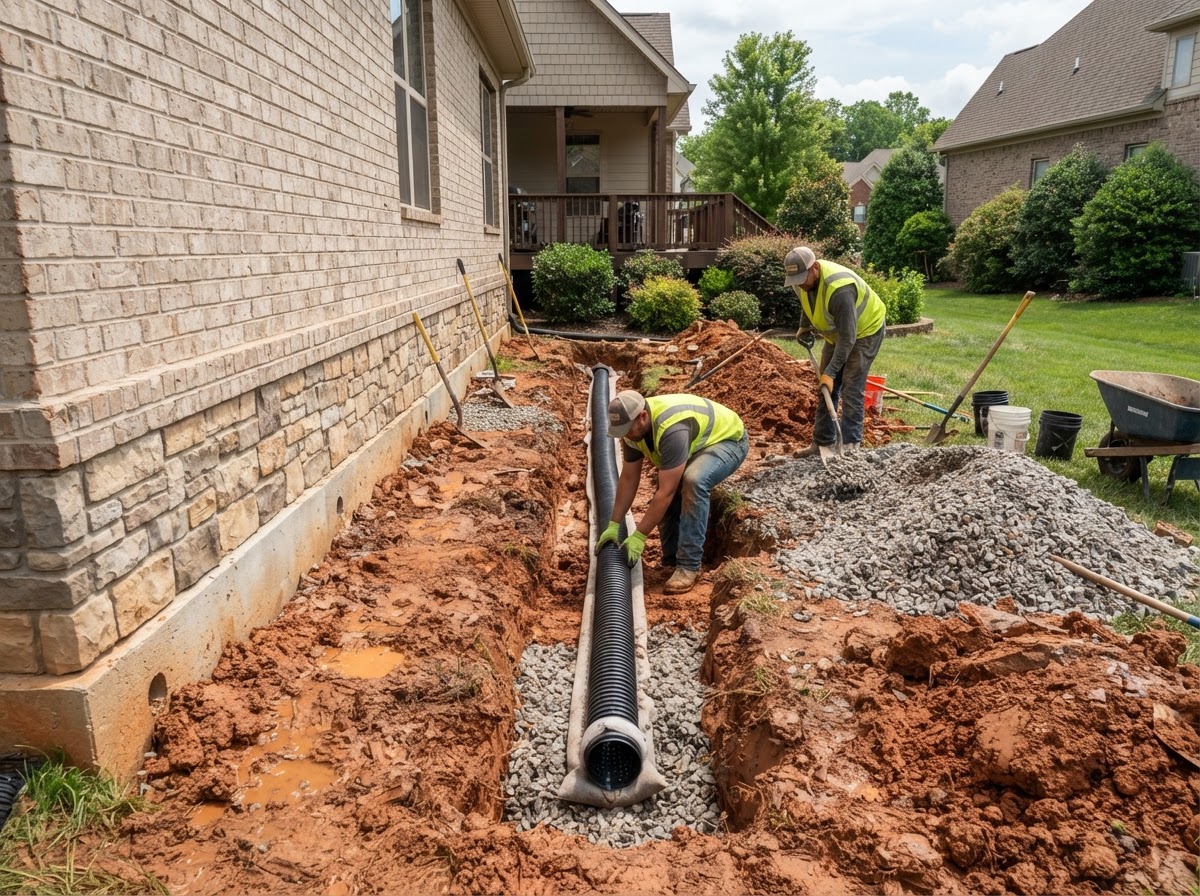
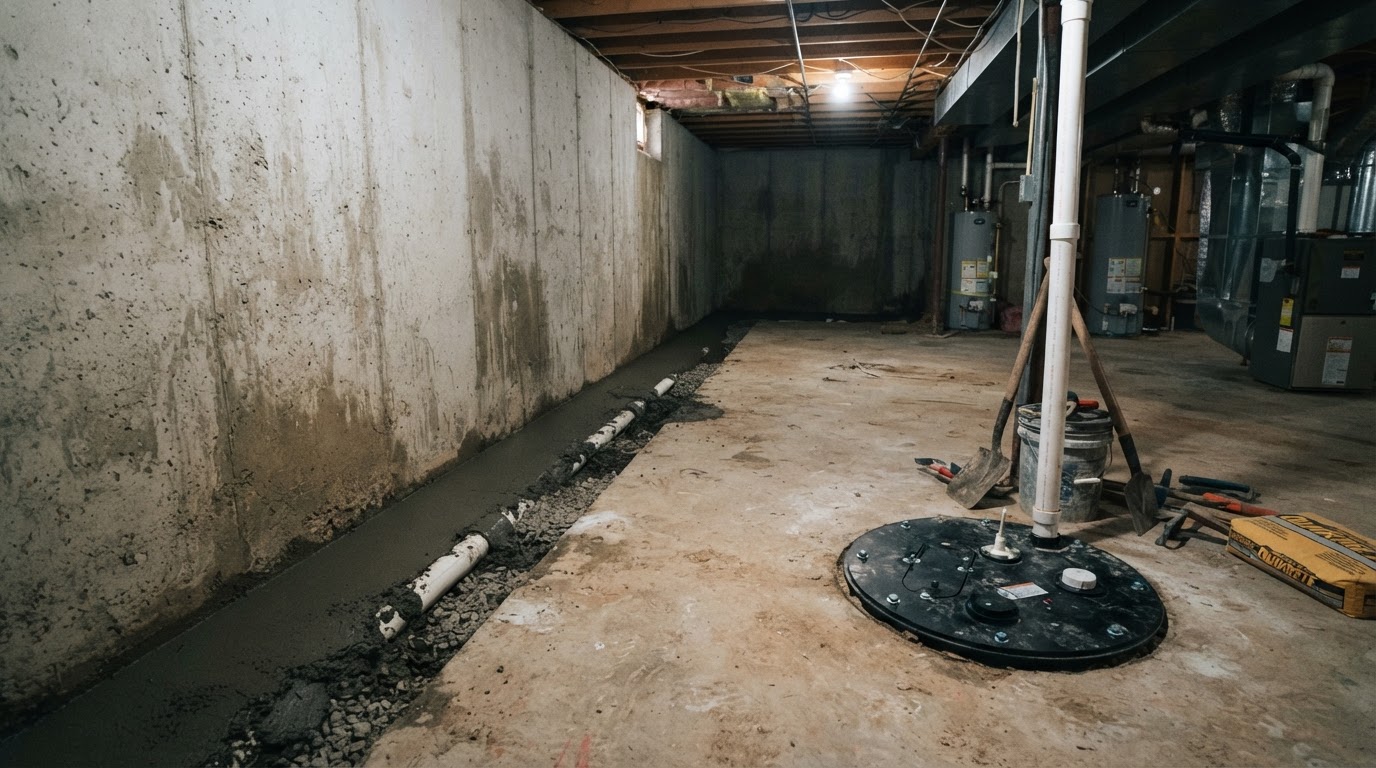
Basement waterproofing is not one product but a set of tools matched to the diagnosis. For water entering at the floor-wall joint or through the floor, an interior drainage system that collects water and directs it to a sump pump is often the practical approach. For moisture coming through walls, the solution may involve addressing the walls, the exterior drainage, or both. For water driven by poor exterior conditions, fixing gutters, downspouts, and grading may be the most important step — sometimes more important than anything done inside the basement.
In plain terms, the process starts with understanding where the water comes from and how it enters, then building a plan that addresses that pathway. That might mean an interior drainage system and sump pump, wall treatment, exterior drainage work, or a combination. We will not recommend a full interior system for a basement whose real problem is a downspout dumping water against the wall, and we also will not pretend a tube of sealant will handle a basement that floods in storms.
What to expect: we explain what the proposed work is intended to accomplish — collecting and redirecting water, managing wall moisture, or improving how water moves away from the home — and what factors affect the scope. We will be honest about whether the basement needs a comprehensive system or a more focused fix, and about any exterior work that should happen alongside interior waterproofing for the whole approach to perform.
Preventing Future Basement Water Problems
Preventing basement water is largely about managing water before it reaches the foundation. The most effective habits are the simplest: keep gutters clean and downspouts extended well away from the house, maintain soil that slopes away from the foundation on all sides, and avoid any landscaping or hardscaping that traps water against the walls. In Middle Tennessee, where heavy spring and summer storms can dump a lot of water quickly, these exterior habits do more to keep a basement dry than most people expect.
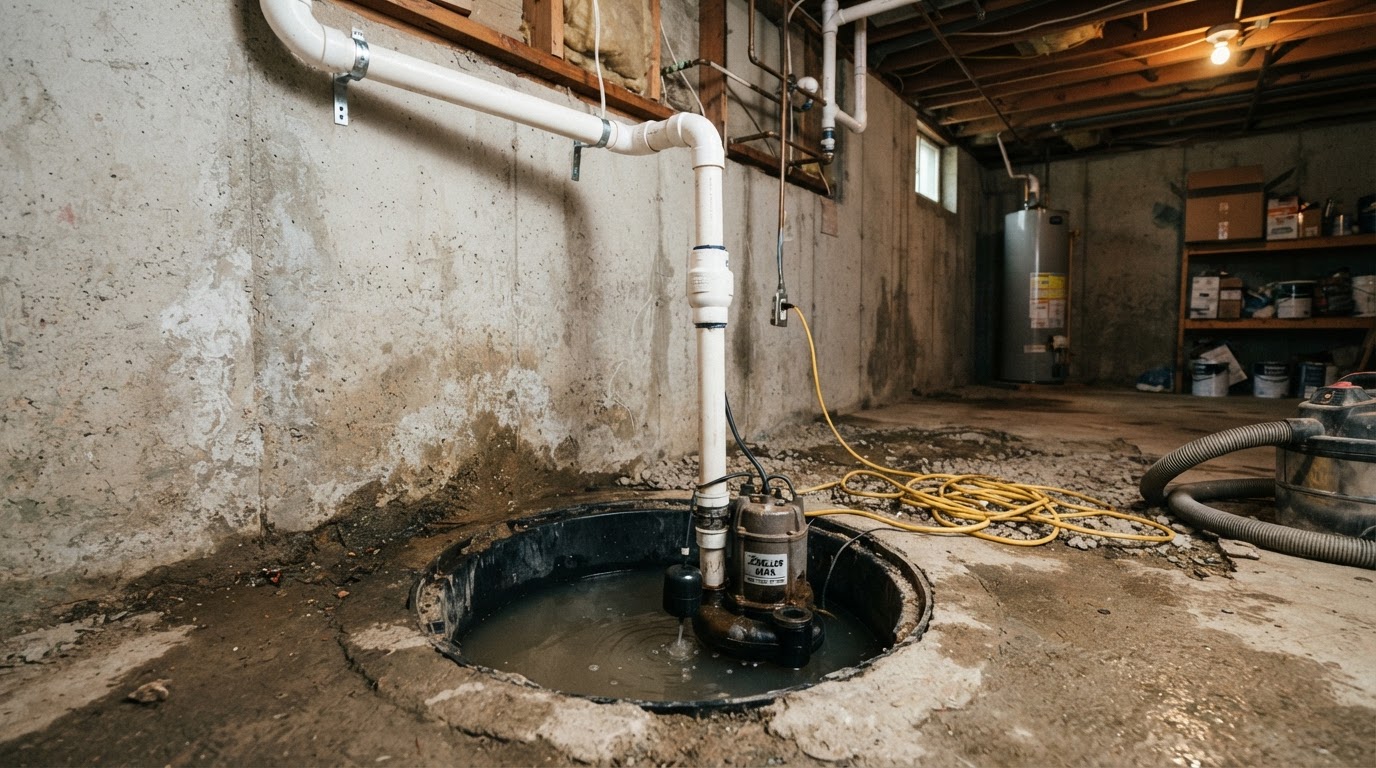
If the basement has a sump pump or drainage system, that equipment needs to be ready before the wet season. Test the pump by pouring water into the pit, make sure the discharge line carries water well away from the house and stays clear, and consider a backup if the home depends heavily on the pump during storms. A pump that fails during the first big rain of the season is a common and avoidable cause of basement flooding.
Seasonally, walk the yard after a heavy rain and note where water sits or flows toward the house. Check the basement for any new dampness, efflorescence, or changes in smell. If you finish a basement, do not cover up a moisture problem — solve it first, because finished materials will hide the early signs until the damage is significant. Calling when you first notice a small change is always less expensive than waiting until the basement has taken on water.
Basement Waterproofing Cost
| Service | Estimated Cost | Average |
|---|---|---|
| Localized waterproofing | Varies by condition | Property-specific |
| Basement drainage and waterproofing | Varies by scope | Property-specific |
| Larger basement waterproofing project | Varies significantly | Property-specific |
Actual cost depends on the source of water, basement size, access, drainage conditions, and the selected waterproofing approach.
Our Basement Waterproofing Process
Describe the moisture problem
Tell us where you see water or dampness and when it typically happens.
Review the basement
We consider visible moisture, entry points, drainage, and surrounding conditions.
Discuss waterproofing options
We explain approaches that fit the observed water-management problem.
Plan the project
Once the scope is understood, we can discuss the work needed to improve basement water control.
Why Homeowners Work With Us
Find the water pathway
We focus on understanding where water is entering before discussing how to control it.
Consider drainage
Effective waterproofing often requires attention to how water is collected and moved away from the foundation.
Keep the scope clear
We explain what the proposed work is intended to accomplish so homeowners can make an informed decision.
Other Services
Foundation Repair
Practical foundation repair for cracks, movement, settlement, and other structural concerns.
Learn moreCrawl Space Encapsulation
Protect your crawl space from excess ground moisture with a focused encapsulation approach.
Learn moreFrench Drain Installation
French drain installation to help collect and redirect unwanted water around your property.
Learn moreSettling Foundation Repair
Targeted repair options for foundations showing signs of settlement or movement.
Learn moreSump Pump Repair & Installation
Sump pump repair and installation to help keep basement water moving out when you need it most.
Learn more