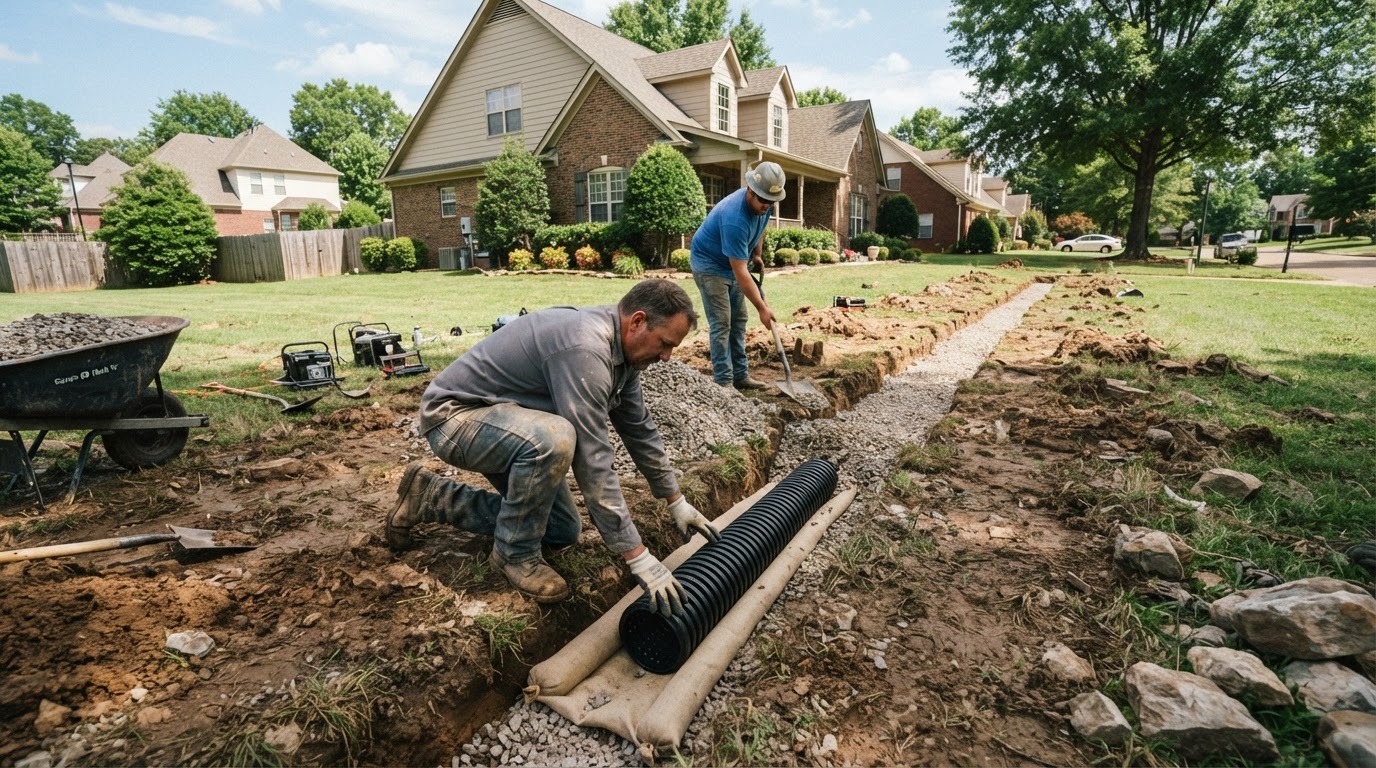
French Drains for Water Management
When water repeatedly collects where it should not, the problem may be more than a single wet spot. Poor drainage can leave soil saturated near a foundation, create muddy areas, contribute to basement moisture, or send runoff toward parts of the property where it causes problems.
A French drain can collect and redirect water through a planned drainage path. The design needs to account for the source of water, the slope of the property, soil conditions, and where collected water can safely go.
When a French Drain May Help
Drainage work starts with understanding how water moves across the property. A French drain is one possible tool for collecting and redirecting water when the site conditions support it.
Standing Water
Persistent wet areas can sometimes be improved by giving surface or subsurface water a controlled path away from the problem area.
Foundation Drainage
Managing water near a foundation can help reduce the amount of moisture collecting against foundation walls.
Yard Drainage
A properly planned drainage route can help move unwanted water away from low areas and toward an appropriate discharge point.
Diagnosing Drainage Problems
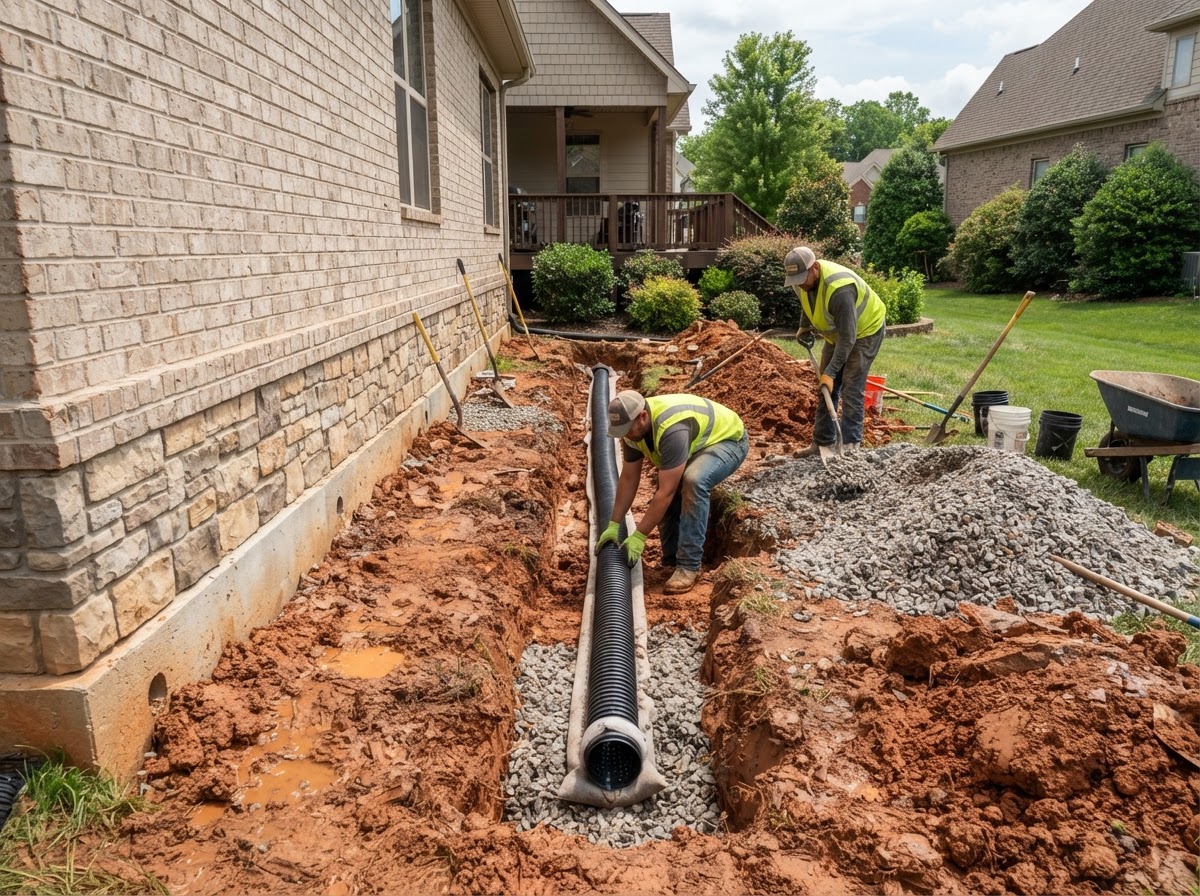
A drainage problem is really a question about how water moves across a property — where it enters, where it collects, and where it tries to go. Before any French drain is planned, the goal is to understand that path. Is the water coming from surface runoff during storms, from a high water table, from a neighboring property, or from downspouts dumping near the house? Each source suggests a different solution, and a French drain is only the right answer for some of them.
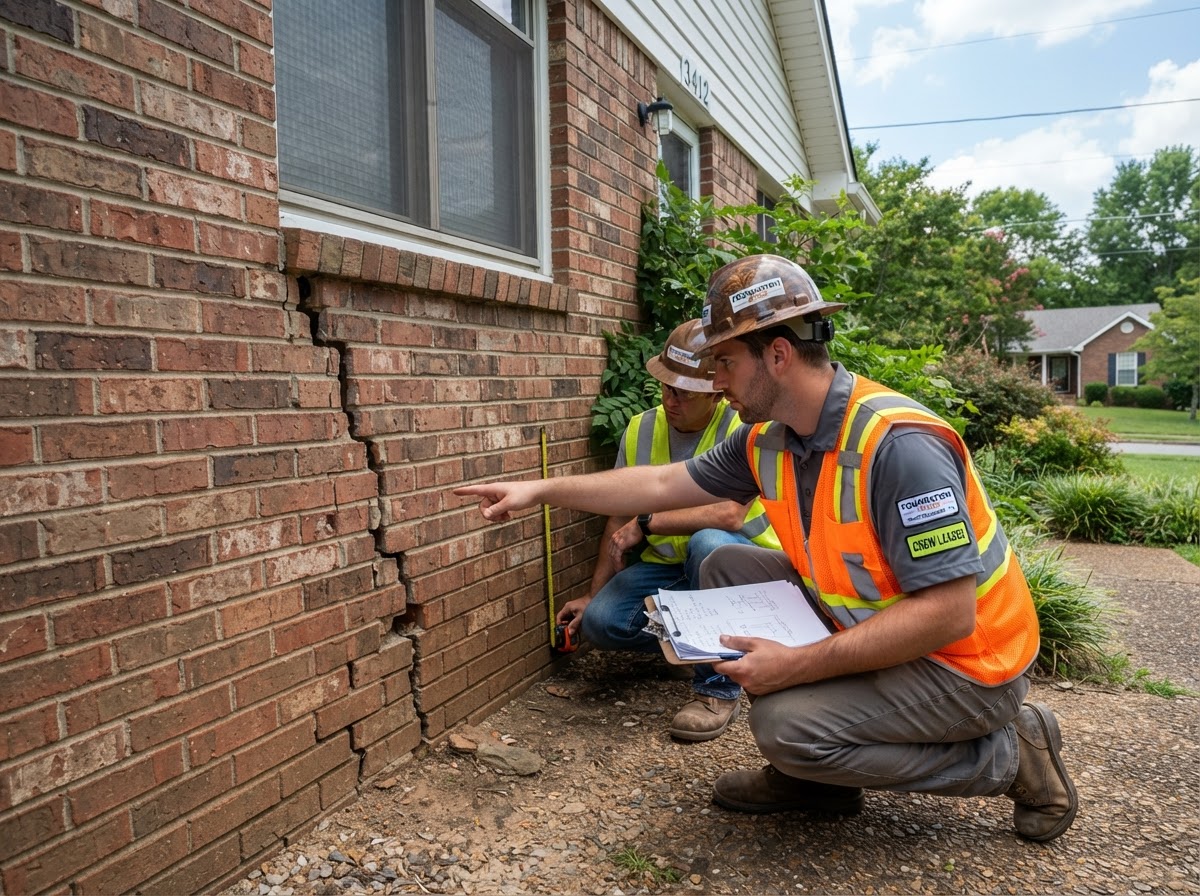
Signs that drainage needs attention include persistent standing water or muddy areas that never fully dry, water pooling against the foundation after rain, a soggy yard that limits use of the property, erosion or channels cut by flowing water, and basement or crawl space moisture that correlates with wet weather. Sometimes the problem is obvious — a low spot that fills with water every storm. Other times it is subtle, like a yard that stays soft for days after rain or a basement that only leaks when the ground is already saturated.
What gets misdiagnosed is the role of slope and discharge. A French drain only works if water can flow into it and if there is a place for that water to go. A drain installed without enough slope, or one that discharges to a spot that itself floods, will not solve the problem. That is why a real diagnosis looks at the whole property — the high and low areas, the soil type, the existing drainage, and a safe discharge point — before deciding where a drain should run and whether it is the right tool at all.
How a French Drain Is Planned and Installed
A French drain is a trench containing a perforated pipe and gravel that collects water and carries it along a planned path to a discharge point. The design has to account for the source of the water, the slope that lets it flow, the soil it runs through, and a safe place for it to exit. In plain terms, the drain collects water that would otherwise sit or flow where it is not wanted and gives it a controlled route away from the problem area — often away from the foundation.
The process starts with understanding how water moves on the property, then planning a route that fits the site. A drain near the foundation may be designed to intercept water before it reaches the walls; a yard drain may be designed to relieve a low, wet area. The depth, pipe size, gravel, and fabric all depend on the conditions. We will not propose a drain without a clear idea of where the water is coming from and where it needs to go, because a drain without a good discharge point is just an expensive ditch.
What to expect: we explain where the proposed drain would run, what it is intended to collect, and where the water would discharge. We will be clear about how the drain relates to the foundation and the rest of the property's drainage, and about any limitations — for example, if the site does not have a good natural discharge point, that has to be part of the conversation before installation. The goal is a system that actually moves water where it should go, not just a trench that looks like a solution.
Preventing Future Drainage Problems

A French drain is durable, but it is not maintenance-free, and the drainage around a home works best when the whole property is managed together. The most common cause of a drain that stops performing is clogging — sediment and roots can fill the gravel or pipe over time, especially if the yard sheds a lot of soil or organic debris into the system. Knowing where the drain runs and keeping an eye on the discharge point during heavy rain is the simplest way to catch a problem early.
Beyond the drain itself, the same water-management habits that protect a foundation protect a drainage system. Keep gutters and downspouts clear and directed away from the house, avoid building up soil or mulch against the foundation, and watch for any new low spots or erosion that develop over time. If a downspout feeds into the drain system, make sure that connection stays intact — a disconnected downspout dumping water next to the house can overwhelm a drain that was sized for yard runoff.
Seasonally, check the discharge point during and after a storm to confirm water is actually exiting the system as intended. If you notice water collecting in an area that used to drain well, or the discharge slows to a trickle, that may mean the system needs attention. And if you are planning any landscaping, excavation, or hardscaping near the drain, make sure you know where it runs — a drain cut by accident during other work is a common and avoidable problem. Calling when drainage slows down is far cheaper than waiting until water is back where it should not be.
French Drain Installation Cost
| Service | Estimated Cost | Average |
|---|---|---|
| Short French drain | Varies by length | Property-specific |
| Foundation-area French drain | Varies by access and scope | Property-specific |
| Larger drainage system | Varies by site | Property-specific |
Pricing depends on drain length, excavation, site access, soil, slope, discharge location, and the overall drainage plan.
Our French Drain Installation Process
Identify the water problem
We discuss where water collects and what happens during wet weather.
Review the property
We consider slope, soil, existing drainage, access, and possible discharge locations.
Plan the drain
The drainage route and scope are matched to the property's water-management needs.
Install the system
The agreed drainage system is installed to provide a controlled path for collected water.
Why Homeowners Work With Us
Follow the water
We look at where water starts, where it collects, and where it needs to go before discussing drainage work.
Site-specific planning
Drainage depends heavily on the property, so the proposed route should fit the actual site.
Foundation awareness
When drainage is close to a home, we consider how water management relates to the foundation and surrounding soil.
Other Services
Foundation Repair
Practical foundation repair for cracks, movement, settlement, and other structural concerns.
Learn moreCrawl Space Encapsulation
Protect your crawl space from excess ground moisture with a focused encapsulation approach.
Learn moreBasement Waterproofing
Basement waterproofing designed to address recurring moisture and water intrusion concerns.
Learn moreSettling Foundation Repair
Targeted repair options for foundations showing signs of settlement or movement.
Learn moreSump Pump Repair & Installation
Sump pump repair and installation to help keep basement water moving out when you need it most.
Learn more