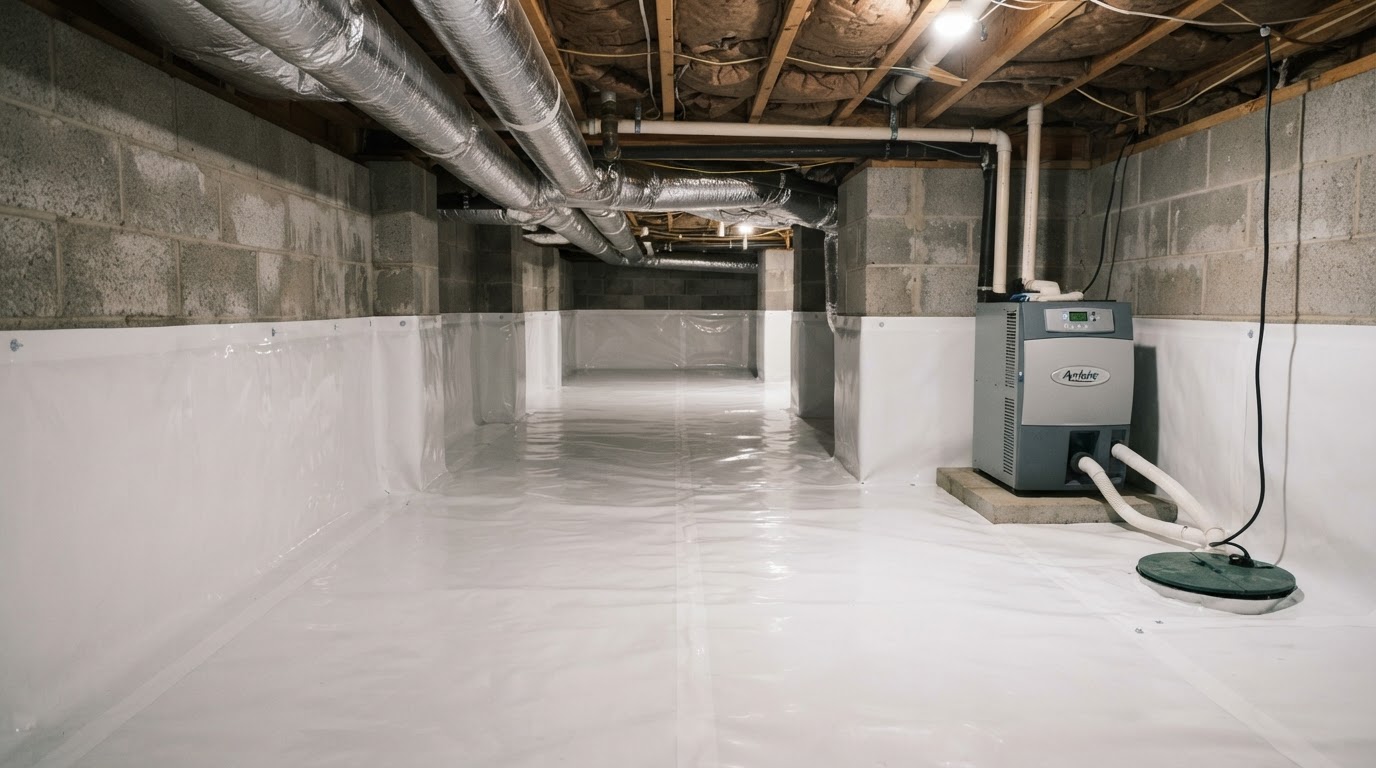
A Drier, More Controlled Crawl Space
A crawl space can be affected by ground moisture, humid conditions, standing water, and air movement from the surrounding soil. When moisture remains uncontrolled, it can create an environment that is difficult for a homeowner to manage and inspect.
Crawl space encapsulation creates a more controlled environment by addressing exposed ground moisture and other pathways that allow moisture into the space. The right approach depends on the condition of the crawl space and its drainage and ventilation characteristics.
What Crawl Space Encapsulation Addresses
Encapsulation is most effective when the moisture conditions in the crawl space are understood first. We look at the space as a whole rather than treating the floor covering as the only concern.
Ground Moisture
A properly installed moisture barrier can help separate the crawl space from moisture coming through exposed soil.
Moisture Pathways
We consider where water and moisture are entering so the encapsulation plan addresses the conditions contributing to the problem.
Crawl Space Environment
The goal is a cleaner, more controlled space that is easier to inspect and maintain.
Diagnosing Crawl Space Moisture
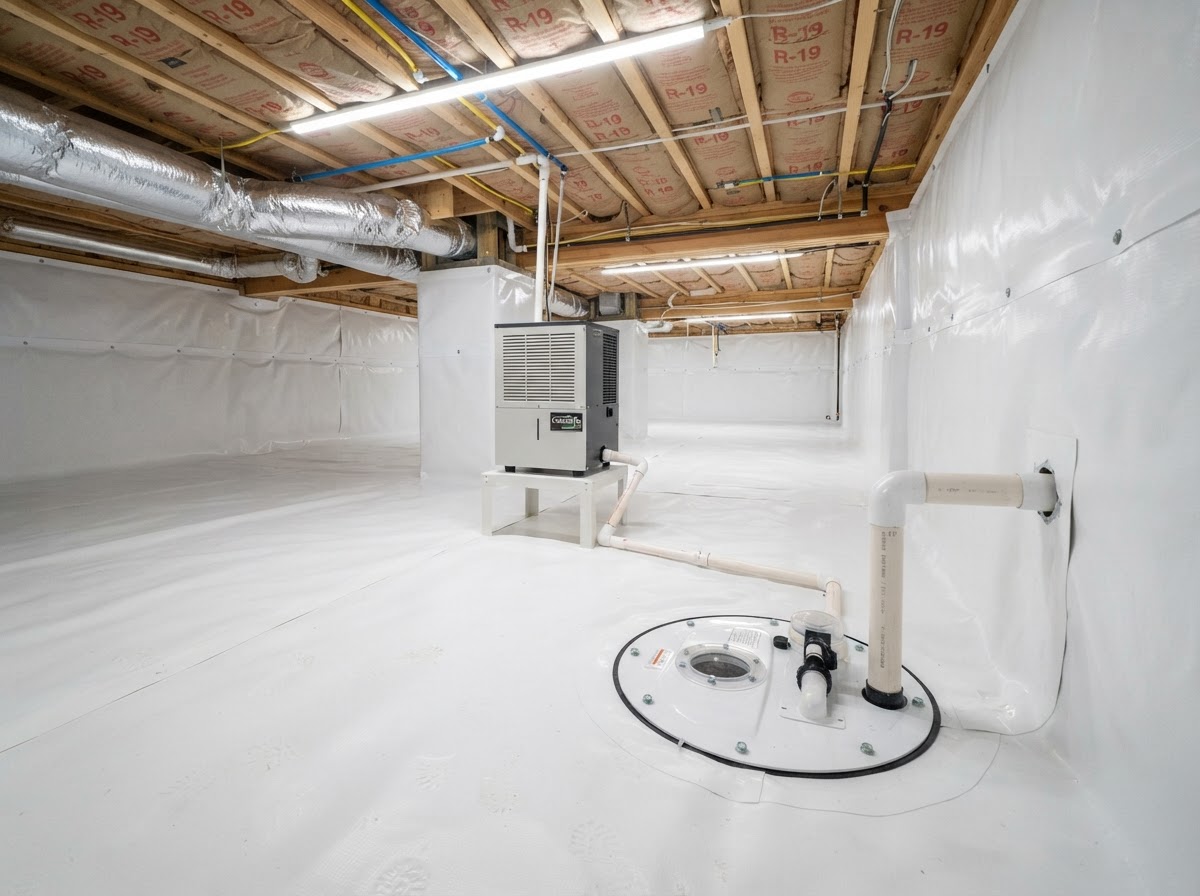
A damp crawl space is a symptom, not a diagnosis. The first question is always: where is the moisture coming from? In Middle Tennessee, the usual suspects are moisture rising from exposed soil, humid outside air entering through vents, surface water draining toward or under the home, or a plumbing leak. Each source points to a different solution, which is why simply laying plastic over the ground without understanding the cause often disappoints homeowners.
Signs that a crawl space needs attention include a musty smell that reaches the living space, visible moisture or standing water after rain, soft or sagging insulation, condensation on ductwork or pipes, and hardwood floors upstairs that cup or warp. You might also notice that the home feels more humid than it should, or that an HVAC system runs longer than expected trying to keep up with moisture. None of these alone is proof of a crawl space problem, but together they suggest the space below the home is affecting the home above it.
What gets misdiagnosed is the role of ventilation. For decades the assumption was that more vents meant a drier crawl space. In a humid climate like ours, venting can actually pull warm moist air into a cooler crawl space, where the moisture condenses on surfaces. That is why a proper diagnosis looks at the whole space — the ground, the walls, the vents, the drainage, and the way the crawl space connects to the rest of the home — before deciding what encapsulation should include.
How Crawl Space Encapsulation Is Approached
Encapsulation is about creating a controlled environment under the home, and the scope should match what the diagnosis found. A typical approach involves sealing the ground and walls with a moisture barrier to separate the crawl space from the soil, addressing the vents and other openings that let humid air in, and — when conditions call for it — managing the air inside the space so moisture does not accumulate. If standing water or drainage is part of the problem, that has to be addressed too, because a barrier over a wet, poorly drained space will not solve the underlying issue.
The process in plain terms: we start by understanding the moisture sources, then build an encapsulation plan around the actual conditions. That might mean a full system covering ground and walls, or a more focused approach if the problem is limited. We will not push a full encapsulation onto a crawl space that only needs drainage help, and we also will not pretend a single sheet of plastic will fix a space with active water entry.
What to expect: we explain what the proposed work is intended to accomplish — separating the crawl space from ground moisture, reducing the pathways that let moisture in, and creating a space that is easier to inspect and maintain. We will be clear about what the system does and does not do, and about any drainage or sump pump work that needs to happen alongside the encapsulation for it to perform the way it should.
Preventing Future Crawl Space Moisture
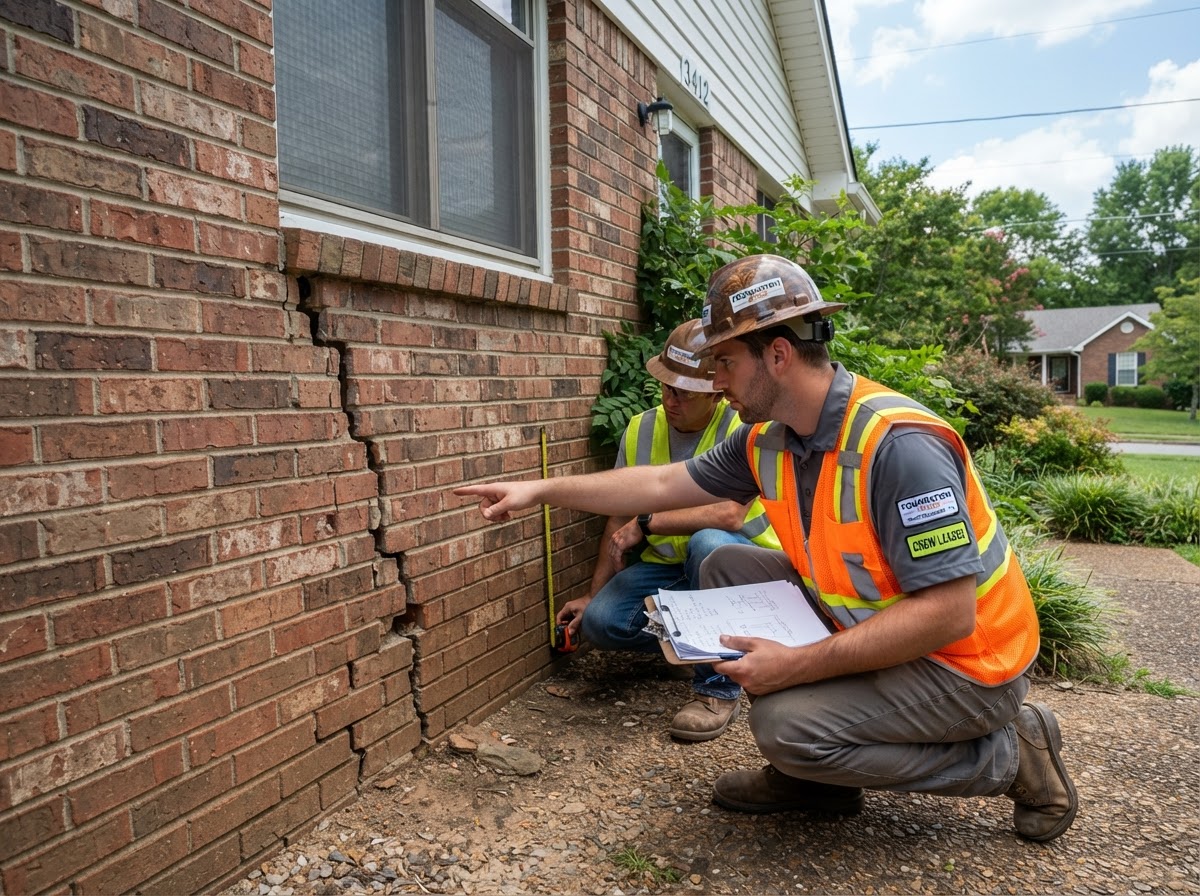
Once a crawl space is encapsulated, keeping it dry is mostly about protecting the system and managing water around the home. The moisture barrier is durable but not indestructible — avoid storing sharp objects against it, and be careful when accessing the space for maintenance. If the encapsulation includes a dehumidifier or sump pump, those need to work when you need them, which means occasional checks rather than assuming they will run forever unattended.
Outside the crawl space, the same water-management habits that protect a foundation protect an encapsulation. Keep gutters and downspouts clear and directed away from the home, maintain soil that slopes away from the foundation, and watch for any area where water pools near the house after rain. A crawl space system can handle a lot, but a yard that floods toward the foundation will test any encapsulation over time.
Seasonally, check the crawl space a couple of times a year — especially before the wettest months and after any major storm. Look for any new moisture, make sure any mechanical components are running, and note any changes in smell or humidity upstairs. If you notice the home feeling more humid or a musty odor returning, that is the cue to call before a small issue becomes a larger one. A well-maintained encapsulation should keep the crawl space clean and the home above it more comfortable for years.
Crawl Space Encapsulation Cost
| Service | Estimated Cost | Average |
|---|---|---|
| Partial crawl space encapsulation | Varies by area | Property-specific |
| Full crawl space encapsulation | Varies by size and condition | Property-specific |
| Moisture-related crawl space work | Varies by scope | Property-specific |
Actual pricing depends on crawl space size, access, existing moisture conditions, drainage, and the scope of work.
Our Crawl Space Encapsulation Process
Review the crawl space
We look at moisture, drainage, access, and the existing condition of the space.
Identify moisture sources
We consider how ground moisture and water are entering or affecting the crawl space.
Plan the encapsulation
The proposed work is matched to the size and condition of the space.
Complete the work
The encapsulation system is installed according to the agreed scope.
Why Homeowners Work With Us
Moisture first
We consider where moisture is coming from before treating the crawl space as a simple surface-covering project.
Practical recommendations
The scope is based on the conditions in the actual crawl space and the goals of the homeowner.
Local service
We work with homeowners in Murfreesboro and surrounding communities on crawl space moisture concerns.
Other Services
Foundation Repair
Practical foundation repair for cracks, movement, settlement, and other structural concerns.
Learn moreBasement Waterproofing
Basement waterproofing designed to address recurring moisture and water intrusion concerns.
Learn moreFrench Drain Installation
French drain installation to help collect and redirect unwanted water around your property.
Learn moreSettling Foundation Repair
Targeted repair options for foundations showing signs of settlement or movement.
Learn moreSump Pump Repair & Installation
Sump pump repair and installation to help keep basement water moving out when you need it most.
Learn more